

Edutainment in the Nursery: When Learning Becomes Play
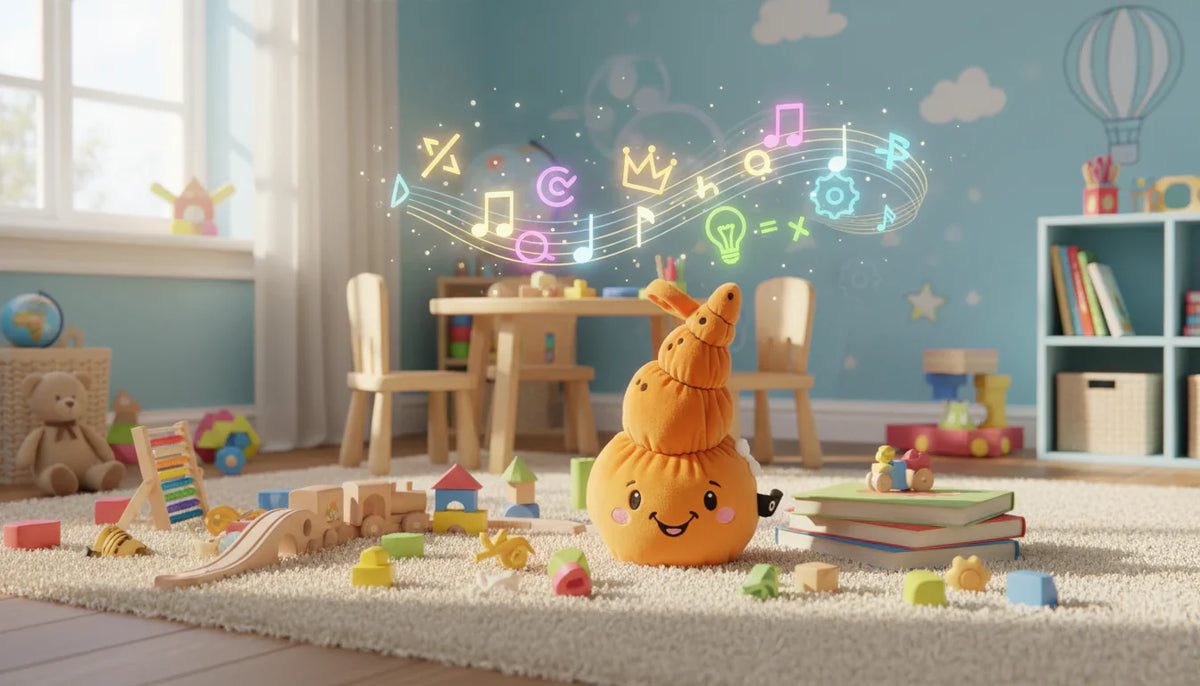
Children learn best when they play. This is exactly where edutainment comes in: combining education and entertainment creates learning experiences that spark curiosity, bring joy, and stay in memory for a long time. But what makes good edutainment, and how can parents recognize products that really deliver?
The most important things in brief
- Edutainment combines learning and entertainment, for example in stories, songs, games, or audiobooks.
- Good edutainment sparks curiosity and encourages children to think along, rather than simply bombarding them with information.
- Learning should not feel like a chore, but it does need age-appropriate content.
- Audio products without screens leave room for children to create their own images in their minds.
- Conversations about what they have heard or played make entertainment real learning.
What is edutainment?
Edutainment refers to products that convey knowledge in an entertaining way. This can include non-fiction picture books, counting songs, educational audiobooks, educational games, or smart toys. The idea is simple: what brings joy is enjoyed again and again, and what is repeated sticks.
Good edutainment products promote not only knowledge, but also skills such as creativity, problem-solving, and language development.
The balance between fun and education
The secret to successful edutainment lies in balance. Learning should not feel like a chore, but entertainment should not overshadow it either. Good products put knowledge into an emotional context: a character who discovers something, a song that explains a sequence, or a story that asks a question.
To be honest: Not everything sold as an “educational toy” actually helps children learn. While many lights, sounds, and quick rewards keep children entertained, they leave little room for thinking. Fewer stimuli and more openness are often the better choice.
How can you recognize good edutainment?
- Age-appropriate: The language, length, and topics suit the child's developmental stage.
- Engaging: The child is encouraged to think along, participate, or continue the story.
- Calmly designed: no sensory overload, no constant rewards.
- Accurate content: The factual information is correct and explained in an easy-to-understand way.
- Open to their own ideas: There is room to take what they have learned into free play.
Edutainment by age
What children can learn through play changes with age:
- Toddlers: Songs, rhymes, and fingerplays, as well as their first picture books about everyday life.
- Preschoolers: Stories about nature, animals, and feelings, simple puzzles, and role-playing games.
- School-age children: Educational audiobooks, numbers and letters in games, and their first experiments.
Our guide to language development in children shows how language develops during these stages.
Smart toys as learning companions
Smart toys can bring edutainment into the nursery. At Lenabo, the system combines a cuddly toy with age-appropriate audio content: stories, music, and educational content that make knowledge come alive without a screen.
Every Lenabie has its own character and voice. The content grows with the child: from listening in infancy to early learning content in the preschool years. This way, a familiar cuddly toy can gradually become a learning companion. You can read about what to look for in smart toys in general in the guide Smart Toys.
Tip: After listening or playing, talk briefly about it with your child: “What did you like?” or “What new things did you learn?” This turns entertainment into real learning.
Conclusion: Learning can be fun
Edutainment can help children learn with joy. What matters is not the technology, but whether a product sparks curiosity, encourages them to think along, and is right for their age. In an age when digital media are everywhere, calm, screen-free products are a valuable addition to free play, reading aloud, and talking together.
Frequently asked questions
What does edutainment mean?
Edutainment is a combination of “education” and “entertainment.” It refers to products that convey knowledge in an entertaining way.
Is edutainment good for children?
Yes, if it is age-appropriate and actively involves children. It complements free play, reading aloud, and conversation, but does not replace them.
What are some examples of edutainment?
Counting songs, non-fiction picture books, educational audiobooks, educational games, science kits, and smart toys with educational content.
Does edutainment need a screen?
No. Many forms do not require a screen, such as audiobooks, books, songs, or audio cuddly toys. Audio products in particular leave room for children to imagine things for themselves.
